The Making of Fogia: A Brief History
A Fogia Journal / 1981-2026
1981
Lars Fritzell and Hans Rosander founded Fogia in the same year as their launch of Combiplex. Today, over 40 years later, the furniture series still has a role in the company’s collection. At Fogia, we believe this is due to how Combiplex tables combine flexibility with simplicity, and to their understated yet playfully postmodern style, which remains relevant.
1986
Fogia begins its longstanding collaboration with designer and interior architect Anika Reuterswärd. Her first assignment is to design a chair for one of the Combiplex tables. This chair subsequently becomes the basis of the Anika furniture series of beautifully crafted wooden tables and chairs, whose hallmark is a cross that reappears variously throughout the series.
1987
Fogia’s first wooden furniture is made by Berndts Snicker in Småland, Sweden. This year, Fogia acquires the woodworking factory Brodd & Allerholm to gain the advantage of combining product design and development with manufacturing. In the late 1980s, the furniture-making company Eje Ström also becomes part of Fogia. During this period, the style of Fogia’s wooden furniture echoes Nordic Classicism, or Swedish Grace, where craftsmanship is a key design element.
1991
Fogia begins collaborating with designer Håkan Urdell, widely known as Sweden’s foremost upholsterer. Its focus now turns in earnest to crafting traditional upholstered furniture, with coil springs, cushions stuffed with down and feathers, and finely detailed nail-head trim. Amongst the pieces are extraordinarily comfortable classic sofas – often in the Howard style – featuring generously deep seats.
This year, Fogia takes the bold step of opening its own factory in Poland, near Gdańsk. Then as now, Poland offers plenty of skilled furniture craftspeople, as well as ample woodlands of beech, pine, and oak – the perfect location for a furniture factory. At the time, neither Sweden nor Poland has yet joined the EU, and Polish democracy is still in its infancy. Indeed, few non-Poles even consider starting a business in the country. Fogia’s success there owes much to Håkan Urdell and his Polish-born wife, Jadwiga, who knows how to navigate the country’s tangled bureaucracy. Håkan, meanwhile, already has an upholstery workshop in Poland. The factory’s first sofa is named Hans – after Fogia’s co-founder, Hans Rosander – and is designed by Anika Reuterswärd.
1996
Fogia launches the Morris sofa, designed by Anika Reuterswärd, which quickly finds its way into homes across Scandinavia. It becomes one of the company’s most popular sofas of all time. Decades later, customers continue to turn up every week, wanting to buy new upholstery for their beloved old Morris. Fogia and its Morris sofa become part of Scandinavia’s late-90s design boom. And yes, the famed sofa still has its place in Fogia’s collection, thirty years later.
1999
Fogia moves into a former steam engine workshop at Finnboda Varv, on the inlet that connects Stockholm to the Baltic Sea. The building quickly becomes a haven for design enthusiasts and is today better described as the company’s home rather than merely its head office. It is an open and vibrant space where everyone interested in design is warmly welcomed. The premises serve many functions – from workplace and studio to exhibition space and boutique.
It is a privilege to operate in a place steeped in so much history. For 99 years, more than 100 large vessels were built at Finnboda Varv, including warships, passenger ships, and freight ships. The first was Talmud, a tanker launched in 1882, and the last was a cargo ferry finished in 1981. The steam engine workshop where Fogia resides opened in 1928. Back in the 1990s, one of Finnboda Varv’s other deserted buildings became the home of Docklands, a legendary rave club. But that’s another story...
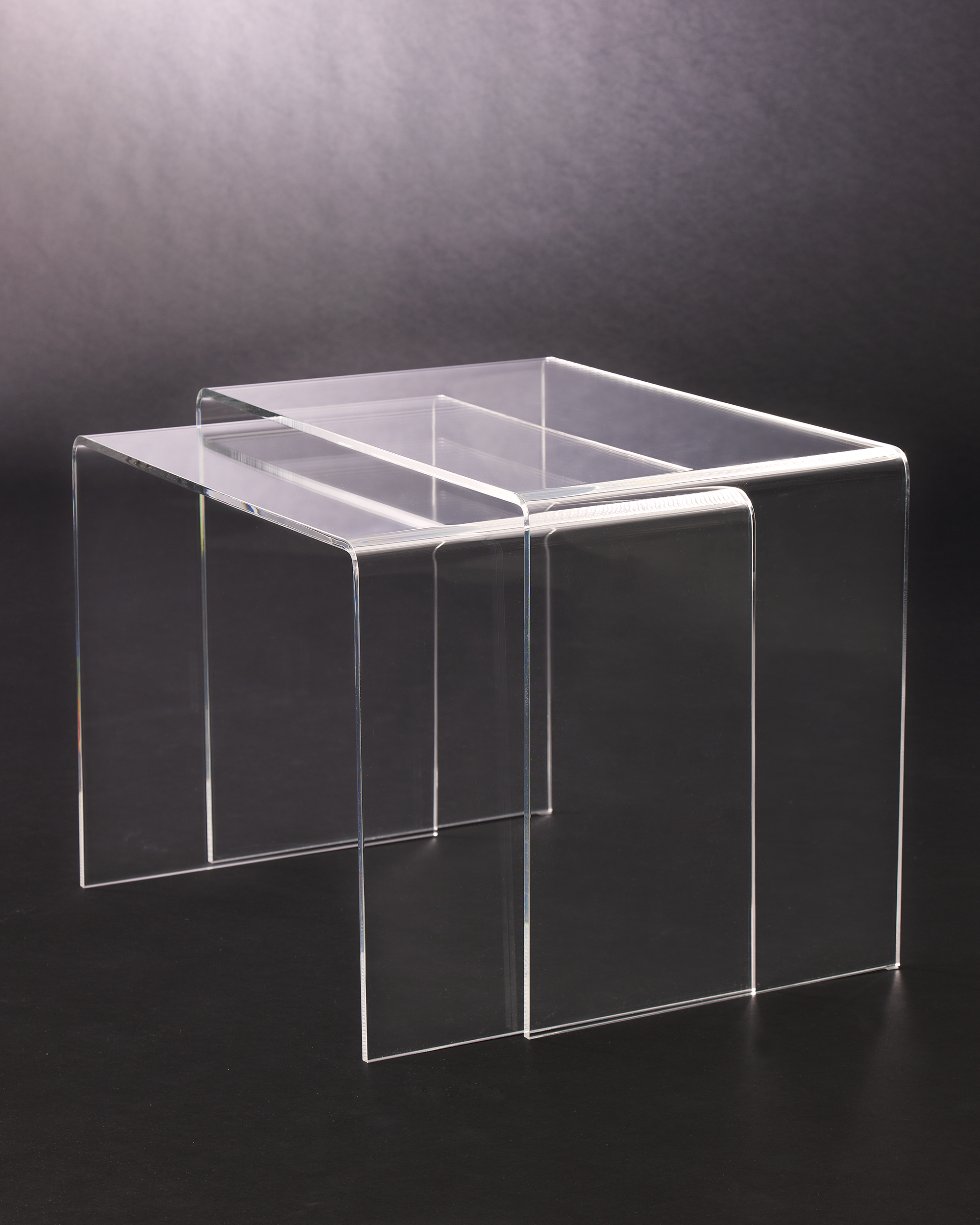
Combiplex Nest of Tables.

Finnboda varv, 1979. Picture by Gunilla Hogling from Nacka Lokalhistoriska's archive.

Starkodder by Finnboda varv, 1953. Picture from Centrum för näringslivshistoria’s archive.
2000
The company has been designing and manufacturing beds since the 1990s. This year Fogia opens a bed boutique on Stockholm’s Drottninggatan. Later, renowned Swedish chef Melker Andersson opens his famed Grill restaurant nearby and furnishes it with furniture from Fogia.
2004
Holiday Club, an ambitiously conceived hotel and conference centre, opens in Åre – Sweden’s largest ski resort. Fogia develops and manufactures the furniture and interior designs for its suites and restaurants. This marks the beginning of what is now known as Fogia Manufaktur – the company’s bespoke furniture division.
Fogia opens an outlet store in Stockholm’s Sickla shopping district and acquires a fleet of delivery vans to make things easier for its customers. During sales events, long lines form outside the store. Doormen are hired to limit the chaos.
2008
Fogia continues to furnish and design Swedish ski resort interiors. In collaboration with interior designers from Koncept Stockholm, Fogia creates furniture and built-in fixtures for the five-star Copperhill Mountain Lodge in Åre – known both for its spectacular vistas and the atmosphere of its tastefully decorated spaces. Fogia’s Copper table, which graces the hotel, ends up in the company’s product collection.
2011
Getting on in years, Fogia’s owner and CEO Hans Rosander decides it is time to pass the baton. After having spent many years searching in vain for the right person to lead the company further, he meets Marcus Huber and Lars Lindgren. Following six months of discussions, Marcus and Lars, who have been friends since childhood, become Fogia’s new owners. Their aim is to revitalize the well-run company – to recharge its engines and reclaim previous relevance. Marcus takes on the role of CEO.
2013
With Note (design studio) acting as its sounding board, Fogia develops a new design strategy that is less about aesthetics and more about an exploratory approach to design. The work to revamp its product range gathers steam. Fogia initiates discussions with new potential designers. Amongst them is Norwegian Andreas Engesvik who has already made a major impact on the international design scene with Norway Says and now runs his own studio. This marks the beginning of a very fruitful creative collaboration.
2014
Having been commissioned by Fogia to design an accessory, Engesvik instead presents sketches of a sofa – as though there weren’t already enough sofas in the company’s collection. Yet, this is clearly no ordinary sofa. Tiki represents something of a milestone for Fogia as a furniture maker. It embodies the compelling blend of qualities the company strives for in every design: function, friction, and finesse.
2016
One often hears the term contemporary icon, yet very few furniture designs truly earn it. Bollo is undoubtedly one of them. When the Bollo lounge chair debuts in 2016, it makes an immediate impact on the design world. Some fall in love with it at first sight, while others react with raised eyebrows, unsure what to make of it – What kind of furniture piece is it, really? It quickly becomes clear, however, that Bollo is amongst the rare pieces that never leave anyone indifferent – and for precisely that reason, remain relevant over time.
2017
Fogia introduces the modular sofa Jord by Luca Nichetto, one of Europe’s most influential contemporary designers. The sofa embodies Nichetto’s ability to combine boldness with warmth and tradition.
2020
At the beginning of the year, Fogia becomes the majority owner of Articles, founded by designer Björn Dahlström and Paulina Springfeldt. Works such as Dahlström’s Superstructure lounge chair and Carina Seth Andersson’s Cube glass vase become valuable additions to the Fogia collection. Meanwhile, Fogia’s inhouse manufacturing capabilities open new possibilities for Articles.
In the same year, Fogia launches Supersolid, designed by Note – a diverse collection of boldly geometric, naïve-style pieces crafted from thick solid oak. No, the benches, stools, and tables in the Supersolid series are unrelated to Björn Dahlström’s Superstructure; they are designed to accompany the Supersoft sofa, also by Note.
2023
Norway has always been a valued market for Fogia. This year, the company opens a showroom in Oslo. The year before, it opened one in Gothenburg.
2025
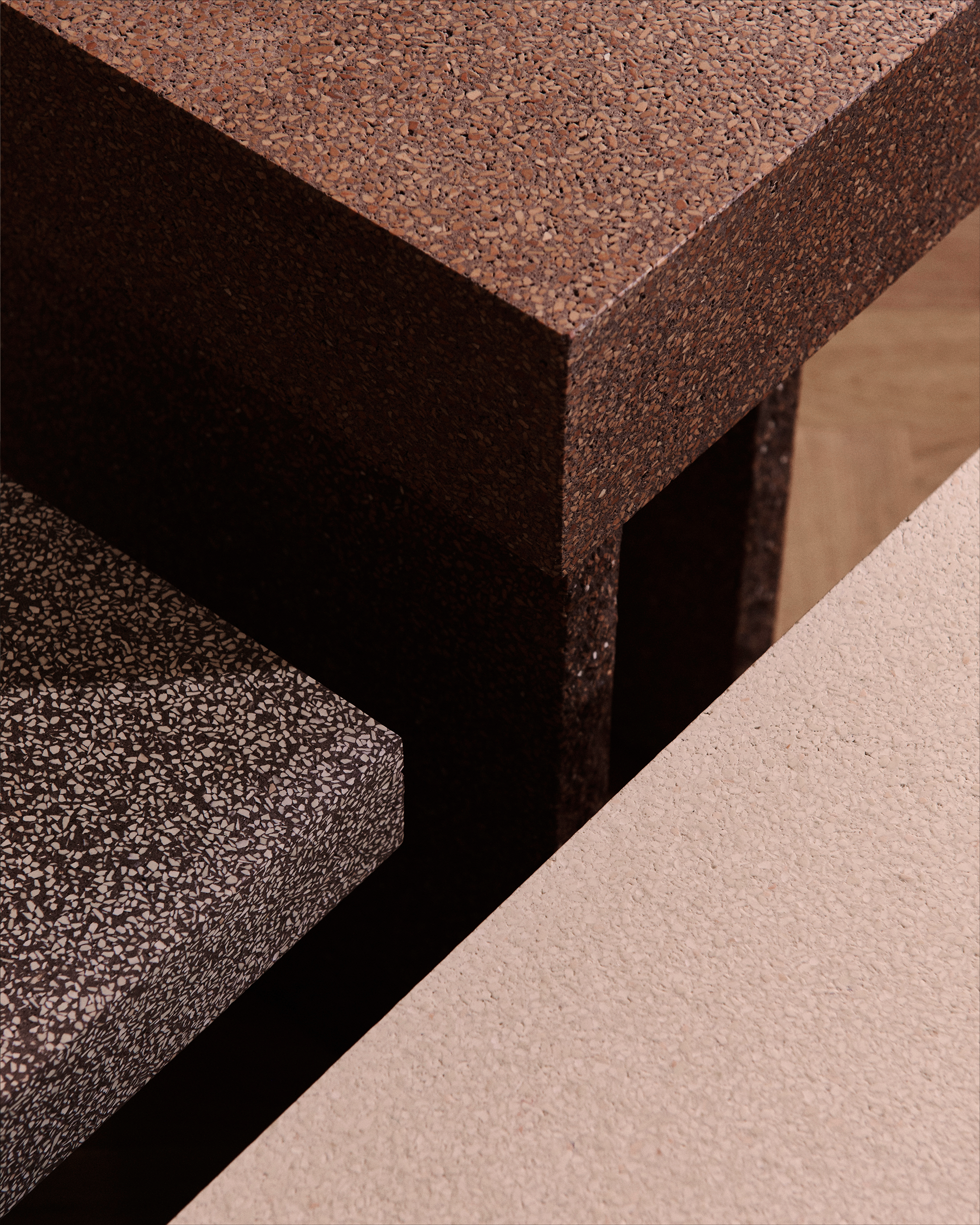
Fogia introduces the Kern table series, designed by Monica Förster – made from a marble-based material created to repurpose waste from marble quarries and producers in northern Italy. Kern reflects Fogia’s approach to furniture making: to create furniture that endures while making the most of the resources required. After all, there is no such thing as waste – only materials whose purpose has yet to be discovered.
2026
The year begins with a series of lively discussions about the role of design today and tomorrow and, above all, the role of Fogia as a furniture maker. The outcome is a manifesto that articulates Fogia’s design philosophy. Meanwhile, Fogia is working on the furniture to be presented throughout the year.
First up is the relaunch of Björn Dahlström’s BD1 armchair, whose naïvist, typographically-inspired design feels as distinctive today as it did in 1993. In spring, new components are added to the Bond shelving system, making it even more flexible.
After the summer, the X dining chair is introduced: the result of a collaboration between Fogia, designer Andreas Engesvik, and Esben Holmboe Bang – the man behind Oslo’s three-star restaurant, Maaemo. The aim was to create the ultimate dining chair: one that you can sit in for hours without ever feeling the slightest bit uncomfortable.