BD1 – Furniture with traces of graphic design
A Fogia Journal / June 2026
A conversation with industrial and furniture designer Björn Dahlström
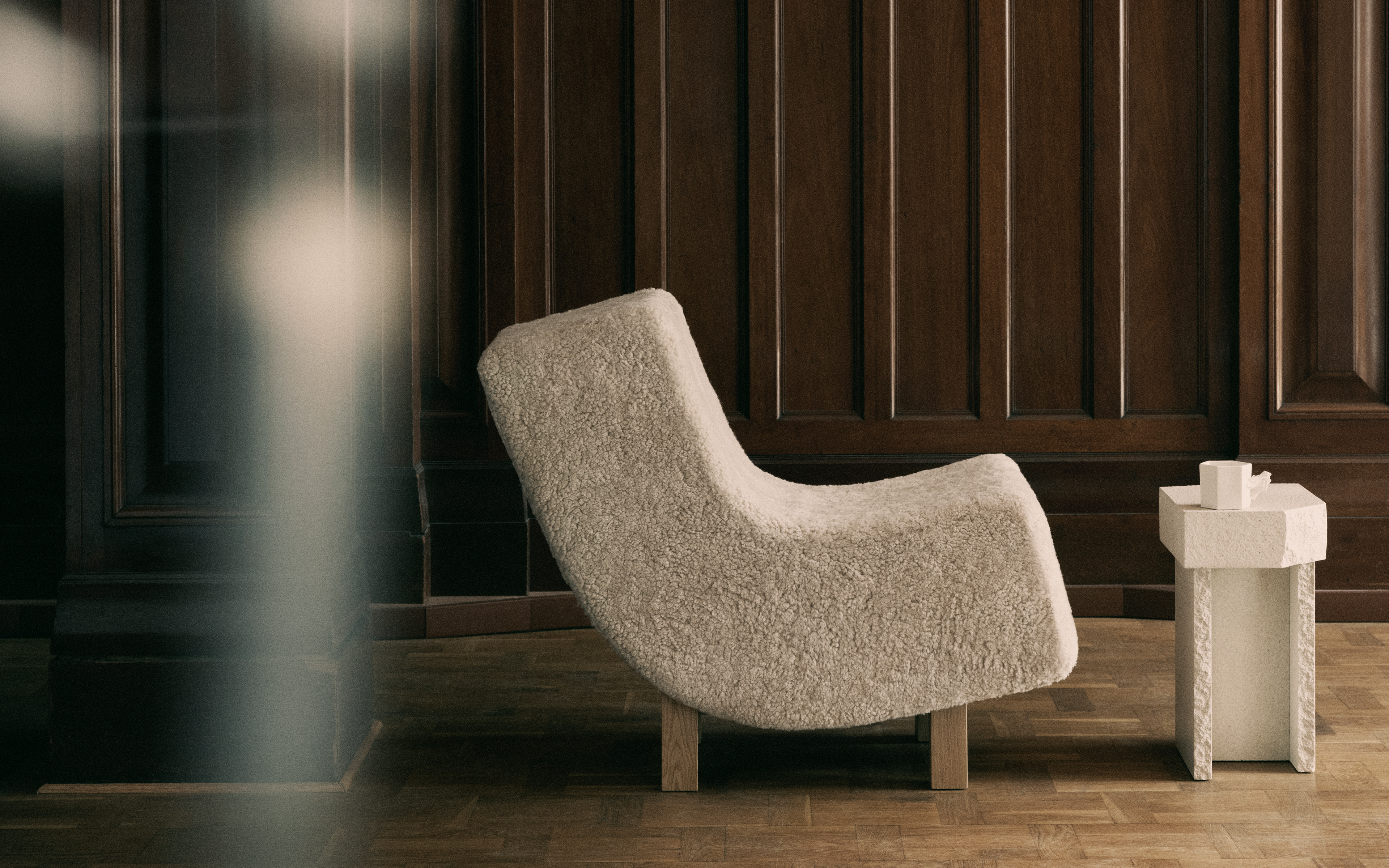
Björn Dahlström began his career as a graphic designer in the 1980s, but soon realised that he was more at home working in the three-dimensional world than in the two-dimensional one. His breakthrough as a furniture designer came in 1994 at Milan’s Salone del Mobile. Then still a newcomer to the furniture world, he had booked a stand himself to present his BD1 armchair. Crowds of visitors flocked to the stand to see the piece and its simple and distinctive shape – namely that of a comma. The rest, you might say, is design history. Today the BD1 is included in the collections of both the Röhsska Museet in Gothenburg and London’s Victoria and Albert Museum. And this year it is being relaunched by Fogia.
It’s been over thirty years since the BD1 was first released. How does it feel to look at it today?
“A bit like seeing an old friend again – a happy reunion. It’s really fantastic that something I designed in 1993 has been reborn. It looks the same, but we’ve changed the construction. It’s an even better piece of furniture today – not least from an ecological perspective.”
Graphically speaking, the BD1 is, of course, very clear and distinctive. How would you say your background as a graphic designer has influenced how you approach furniture design as a whole?
“Well, there are definitely traces of graphic design in my furniture. (laughs) You can see it in the way I work with lines and shapes. I also think there’s a link to graphic design in my tendency to organise. I really like arranging lines and building systems. Take Superstructure, for instance. If you look at the drawings or view the armchair directly from above, you’ll see that the lines formed by the wooden slats all run parallel. An even clearer example is the Kaskad armchair. The steel wires it is constructed from are reminiscent of a pen-and-ink drawing. I think it’s a lot of fun to construct three-dimensional shapes like that.”
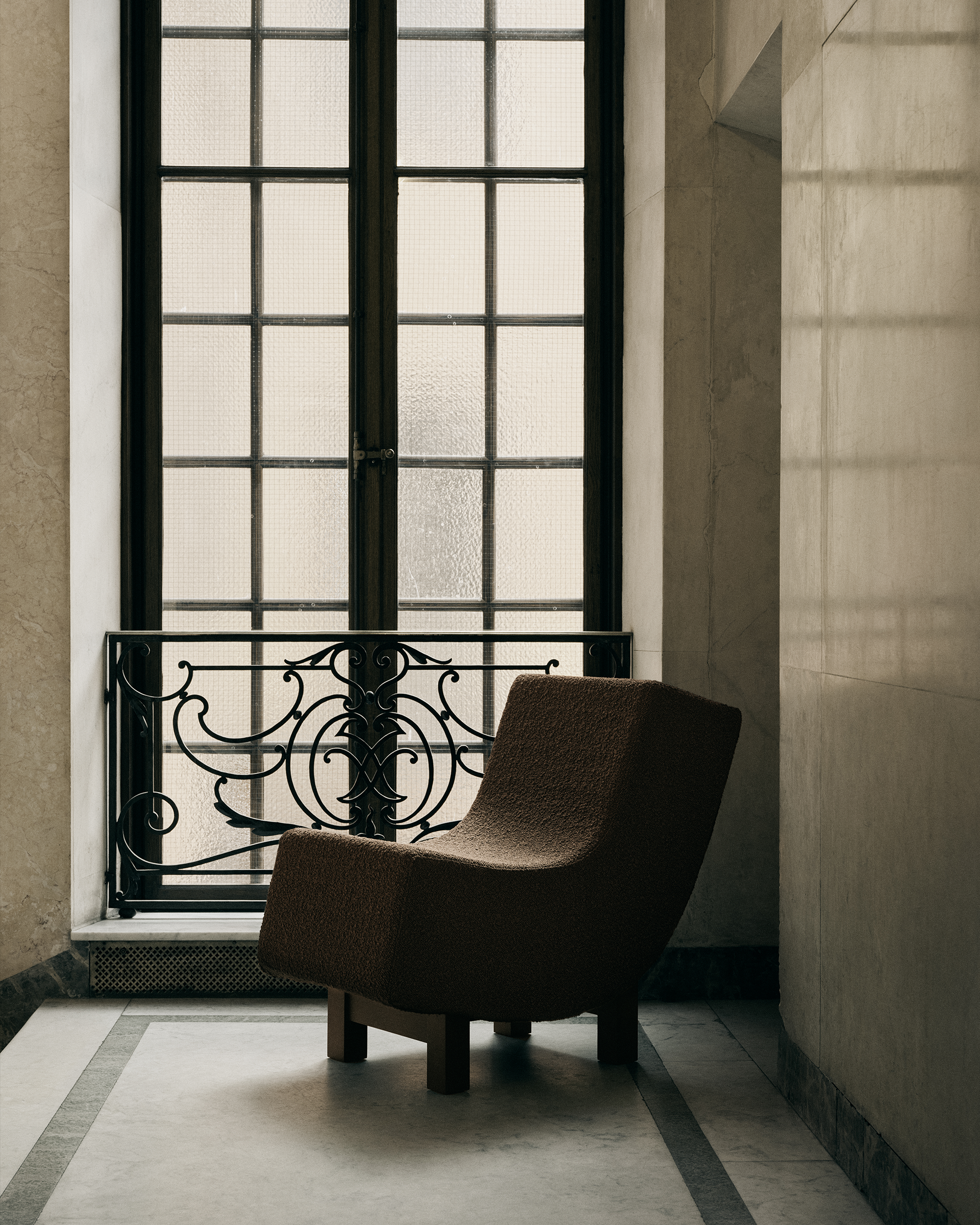
More than thirty years after its debut in Milan, the BD1 Lounge Chair remains difficult to place in any particular era. Shown here at Fenixpalatset, Stockholm.


“A bit like seeing an old friend again – a happy reunion. It’s really fantastic that something I designed in 1993 has been reborn. It looks the same, but we’ve changed the construction. It’s an even better piece of furniture today – not least from an ecological perspective.”
Björn Dahlström

Superstructure Lounge Chair by Björn Dahlström. Viewed from above, the wooden slats form a carefully ordered pattern – furniture with traces of graphic design.
Every designer has their own way of working. Some take an exploratory approach, starting with a material, for example, and let the process itself guide them to the final product. Others have a clear idea right from the start and then try to work out how to make it real. Björn definitely belongs to the latter category.
“My processes often start with a technical idea, which I then explore. Sometimes I don’t sketch by hand with a pen and paper. Instead, I walk around and think. I turn an idea over and over in my mind – ‘What happens if you do it this way?’ – ‘And what if you add that?’”
As though you had a sketchbook in your mind?
“Yes, I develop and sort out the idea in my head. Only a fraction of the ideas actually come to fruition, but if I come up with an idea that I feel is worth pursuing. I can relatively quickly do sketches on the computer to get very close to a finished product.”
The way you describe your work, it sounds a bit like a conversation you have with yourself, where you try to find solutions to specific problems.
“Yes, the work is like a dialogue, where I start by posing specific questions that I then try to answer. For example ‘What kind of ergonomics can be achieved with these materials or based on this technical idea?’ Superstructure was the result of a similar question: Is it possible to make a seat basket from parallel slats fastened to a flat ring?”
Björn is a truly versatile designer. In addition to furniture, his body of work includes motor-driven breakers, wine glasses, interiors for museums and shops, toys, and even a bicycle. Because he regards furniture design, in particular, as a joyful creative outlet, his work in this area seldom flows from the briefs and commissions of others. Instead, he is the one contacting potential partners, whenever he has a presentable idea.
“I like to treat furniture design partly as a hobby. I do it purely and simply because it’s so interesting. It allows me to take the time I need to explore different ideas.”
Many of Björn’s works are based on simple and idiosyncratic ideas that have been executed with great rigor and consistency. They are bold and distinctive furniture pieces that enliven surroundings and defy expectations.
Products designed by Björn Dahlström