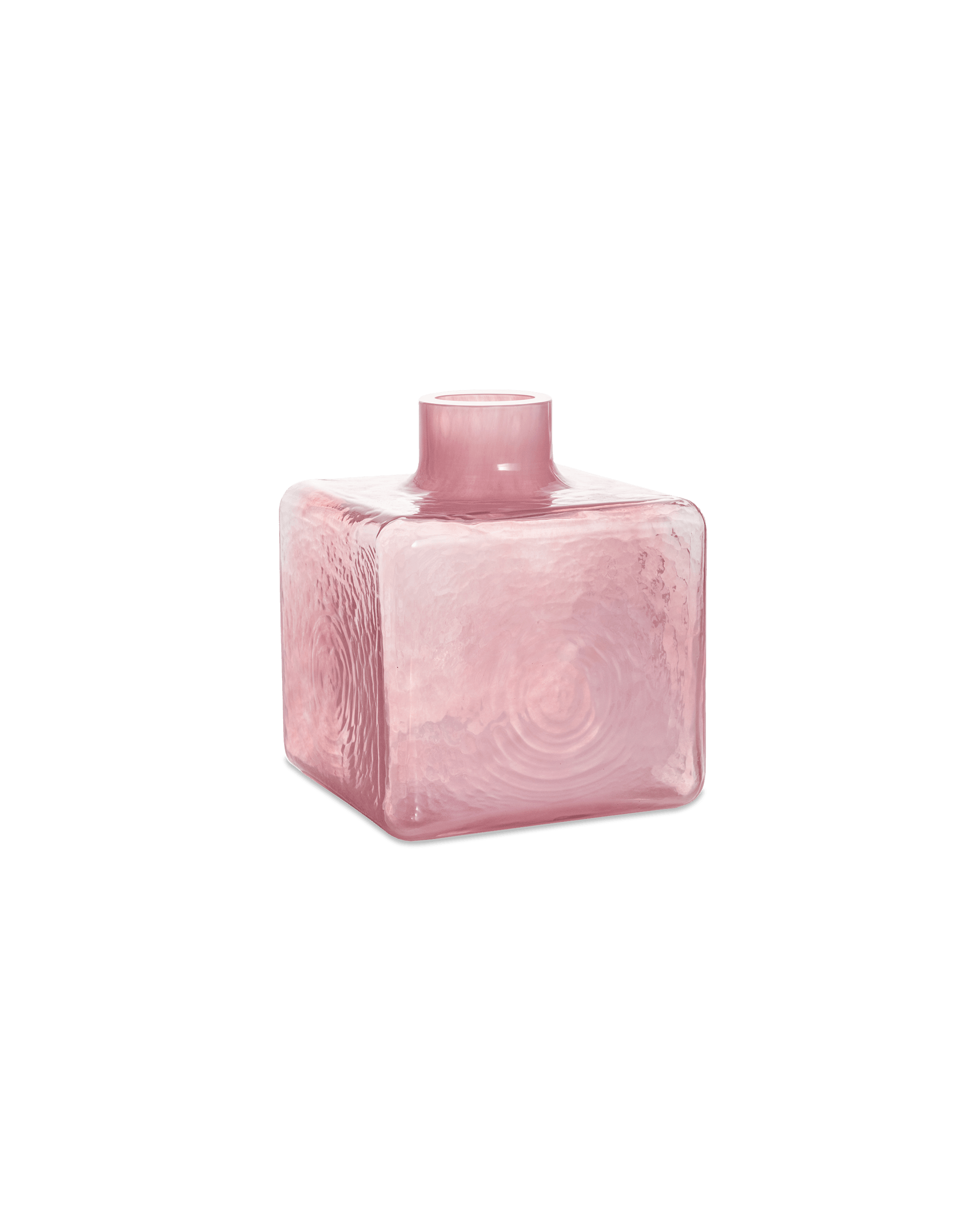
Cube Vase, Large
Carina Seth Andersson
Cube is shaped in the moment where molten glass settles, its surface marked by subtle vibrations and shifting colour, making each vase quietly distinct.
Selected looks
Pink glass
to explore the possibilities, from fabrics and colours to finishes.
Product details
Glass holds a moment. Not fixed, but slowed down. With its broader proportions and narrower opening, Cube Vase Large has a quieter weight to it – equally suited to smaller floral arrangements or as a sculptural object in its own right. The softened geometry of the cube-shaped base contrasts with the restrained, cylindrical neck, creating a form that feels both grounded and light.
Designed by Carina Seth Andersson and made by hand at Skruf Glasbruk in Småland, Sweden, each vase carries the marks of its making. As the molten glass settles into the mould, subtle vibrations form a soft relief across the surface, reminiscent of rings on water. The colours gather and shift within the material, creating depth rather than uniformity.
No two vases are exactly alike. Slight variations in tone and form are not deviations, but part of the expression. They reflect the meeting of fire, air, earth and water – and the hands that guide the process. Cube Vase Large holds flowers beautifully, but just as much light, colour and presence when left empty.
Combined with Cube Vase Small and Cube Vase Tall, the different proportions create an interplay between height, volume and openness. Together or apart, each vase carries its own distinct presence.
Specifications
- Product family
- Cube
- Product name
- Cube Vase, Large
- Designer
- Carina Seth Andersson
- Year
- 2018
Measurements
- Width
- 20 cm
- Height
- 23 cm
- Depth
- 20 cm
Image gallery


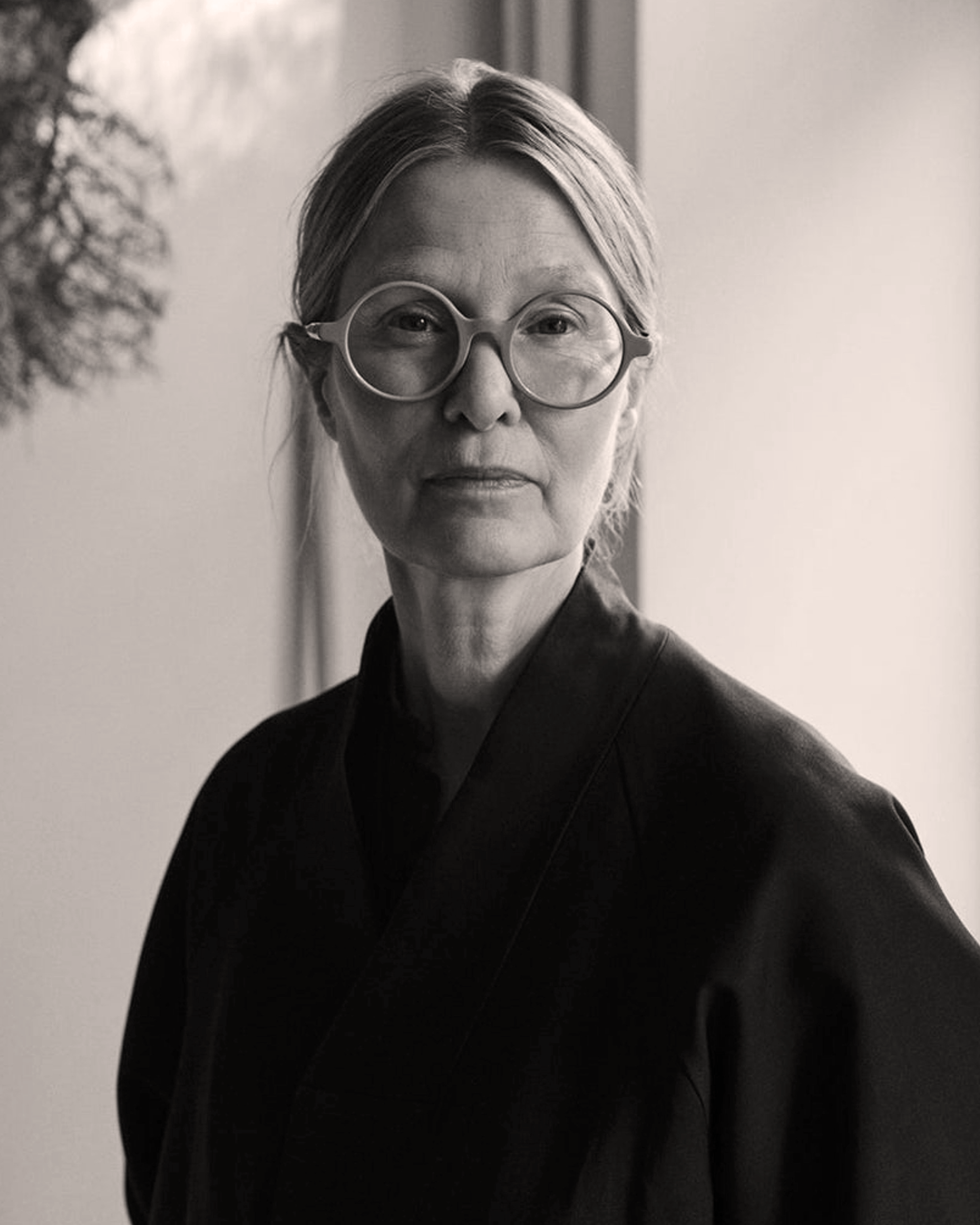
The designer / Carina Seth Andersson
Carina Seth Andersson is a Swedish designer whose work moves between glass, ceramics and everyday objects. Educated at Konstfack in Stockholm, she approaches design with a close attention to materials, proportion and the possibilities of simple forms.
Cylinders, cones and cubes often become starting points. Through subtle adjustments to their proportions, thickness and surfaces, she gives familiar shapes a character of their own, allowing the materials to speak without unnecessary decoration.