Elmo Leather – Crafting a Swedish Legacy in a Circular Age
January 2026
In the beginning of 2026 Fogia got invited to a factory tour at Elmo Leathers in Svenljunga, a small town in the western part of Sweden – known for its long tradition of leather and textile manufacturing.
What began in 1931 as a traditional tannery producing shoe leather has evolved into one of Europe’s most respected suppliers of premium upholstery leather for furniture, automotive, aviation, rail and marine interiors. Today, Elmo stands not only as a heritage manufacturer, but as a case study in how a centuries-old material can be redefined for a sustainability-driven world.
All hides is sources exclusively from Scandinavian cattle, using by-products of the meat and dairy industries. Strong animal welfare standards and traceability ensure both quality and responsible sourcing from the very beginning of the process. Production combines advanced tanning techniques with a lot of hands-on craftsmanship. Like that each hide is individually inspected, reflecting leather’s inherent uniqueness.

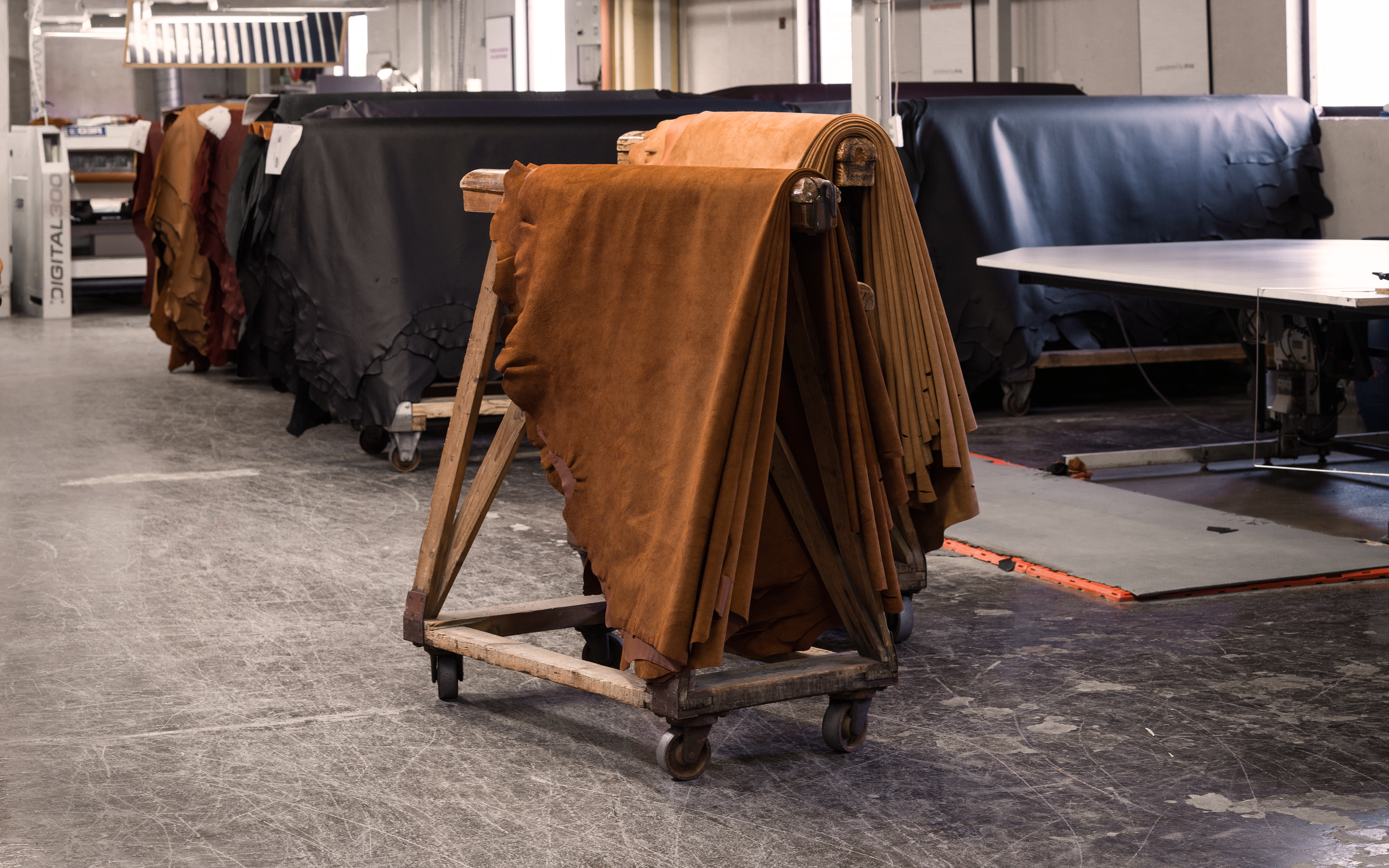
Hides ready for the final inspection.

A raw material with responsibility. Leather begins with hides, these hides are by-products of the regional meat and dairy industries, meaning animals are not raised for leather alone. Scandinavian hides are widely regarded for their strength and quality, thanks to animal welfare standards and environmental conditions that reduce damage to the skin. Traceability and ethical sourcing are central pillars of the company’s operations – an increasingly critical factor in global supply chains where transparency is no longer optional.

Each hide is inspected with the human eyes and graded into four levels.


